

Installing Queens

Replacing Queen Methods Explained
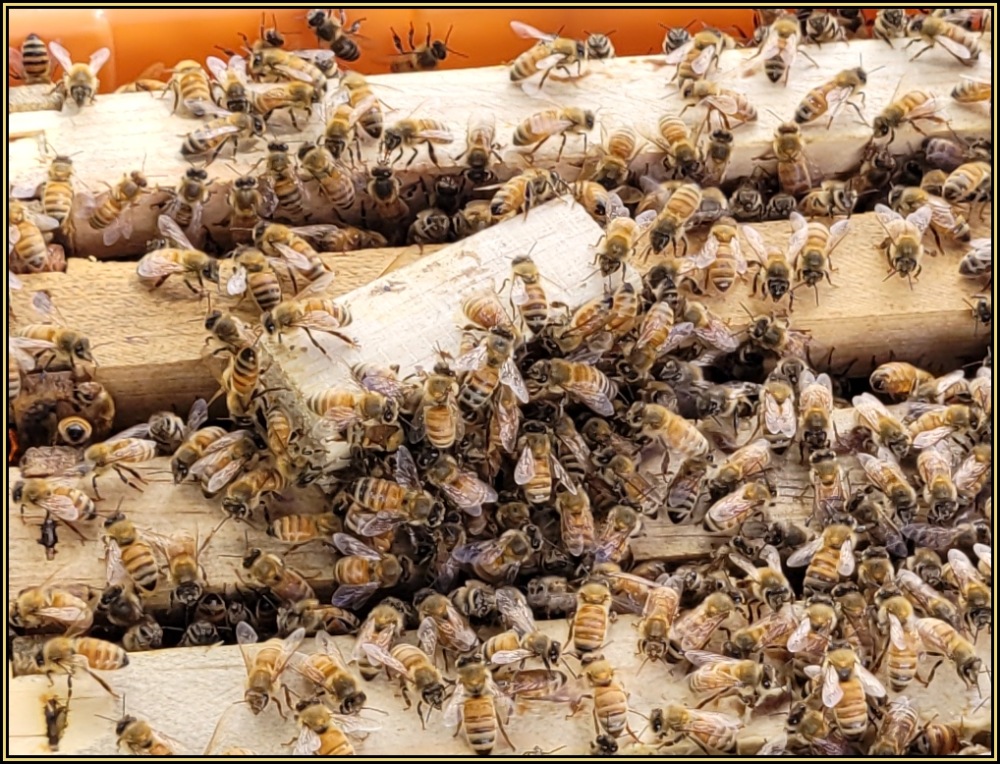
These bees are ready for a new Queen
Notice how the bees are behaving towards the queen in the JZ-BZ plastic cage and attempting to feed her through the narrow openings. This is a sign they are happy to have the new arrival of a new mother. Perhaps they instinctively know the day is saved and all will be well in their, about to be "queen-right" world. The colony will survive now and they can all relax and settle down.
Methods of Introduction
There are a few simple rule to follow to increase the acceptance rate.
The queens come in cages that have a small straw like tube filled with a semi-hard "Queen Candy", a mix of powdered sugar and syrup or honey, that when consumed by the bees, the queen can fit through and crawl out and into the hive.
The bees will eat the candy in the tube, not because they know their new hive mother will be released, but because they like candy.
This process can take a couple of days, depending on colony strength and other conditions, but normally works like a charm provided a few basic conditions are met.
Even the most gentle colony can become fussy when they are without a queen, but the average hive will accept a new queen using the standard 24 - 72 hours introduction period. However, aggressive bees tend to be more difficult to get to accept a new queen. Evaluating the hive's temperament can be a factor in deciding on the best method for queen introduction.
We have a few tips and techniques that should help with this fairly simple task. First we'll review the basic recommendations (rules of the road) and a couple of options and then explain the uses and when each is appropriate.
Rules of the road for introducing a new queen.
- First, make sure the hive is queenless for at least 24 hours.
- This is so they will be more readily acceptance of a new queen.
- Second, when using the wooden cages, make sure the queen's cage is positioned in a way that the bees can get to the queen to tend to her needs as the waiting period passes.
- The bees need to feed her and keep her hydrated while you wait the recommended period of time of 24 to 72 hours before she is released.
- Third, come back in three days to make sure she's out. If she's not, you can manually release her by then as long as the bees are behaving towards her as if they're ready.
The bees will show some little signs that indicate their readiness. The video below shows the behavior they display when they are happy to have a new mother for the colony.

Queen Cages
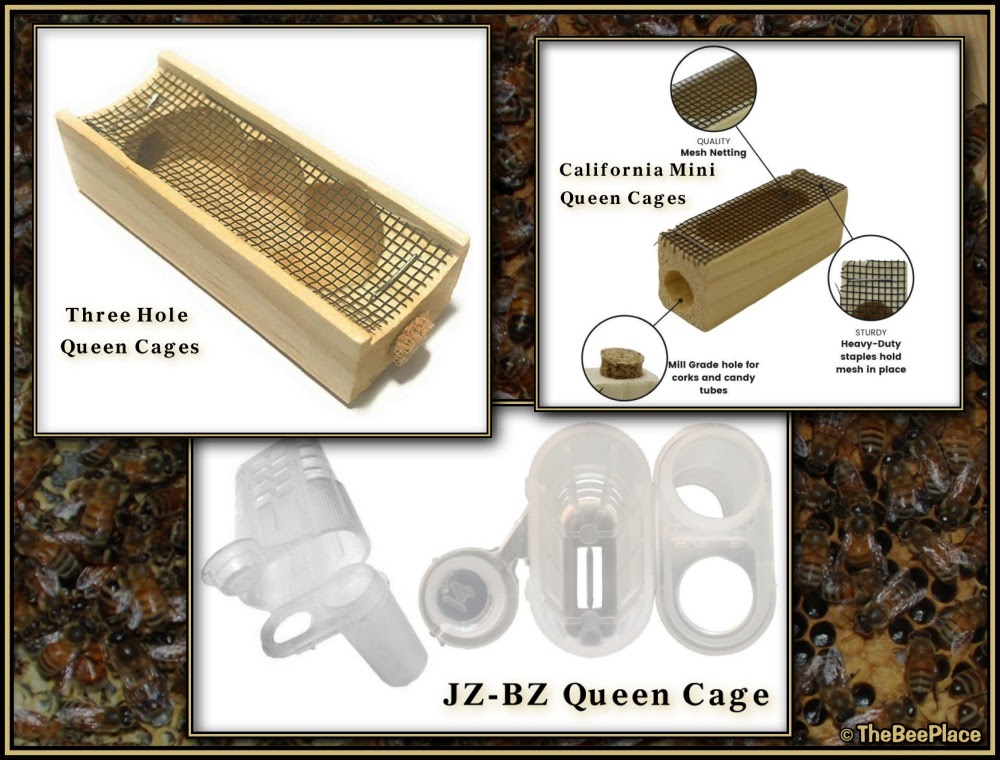
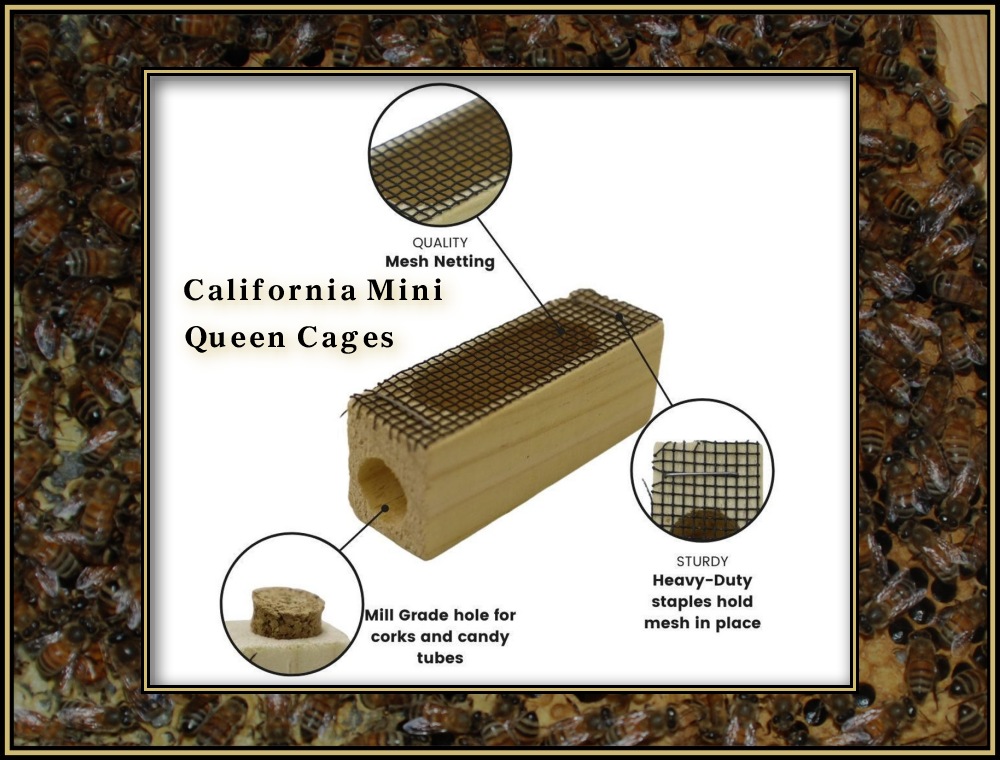
Here are 3 of most common queen cages, JB BZ plastic cages, the Three Hole wooden cages and the California Mini cages (my favorite) and of course there are others. They generally all have the same basic functions. A screen or small openings that bees can not pass through, but can feed the queen and keep her hydrated while she is being housed and is unable to fend for herself. This also provides the worker bees that are tending the queen to sample and then share her pheromones with the rest of the colony - a key part in this process.
There are physical doors that can be opened on the JB BZ and candy tubes or corks that can be removed so she can just walk right out, once enough time has passed and they are ready for her to enter safely without aggression.
The tubes are filled with queen candy (a paste of confectioners sugar & syrup or honey in a straw like tube) for an "automatic" slow release process. This works most of the time, but checking back in a few days is a good idea, occasionally the bees ignore the candy and she stays trapped.
Normally, the bees eat the candy because they like candy, not because they somehow "know" the queen will get out and save the day by laying a few thousand eggs daily. In this way, she is introduced slowly, over a few days time, so the colony will readily accept her and not ball her upon entry to the hive.
JZ-BZ Queen Cage with large opening. The queen cage features a tapered candy tube, large overall opening, and secure closing mechanism for ease in use.
Manual Introduction Cage
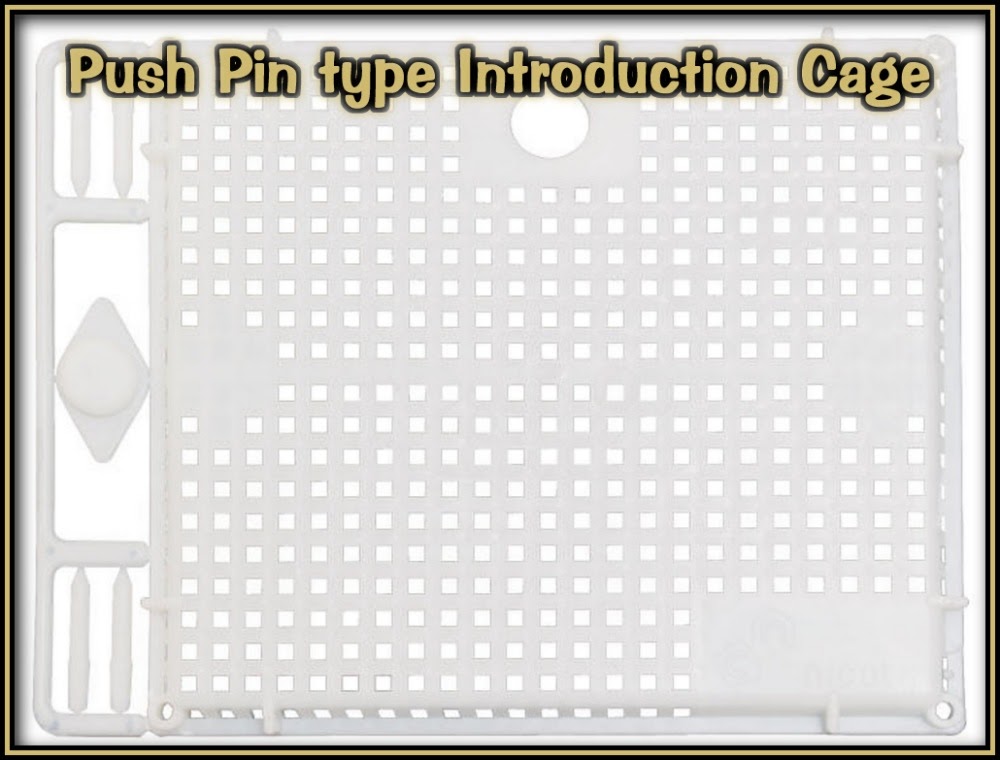
aka "Push Pin" type Queen Introduction Cage
For those difficult hives or perhaps some other reason for needing a slower introduction or queen isolation... i.e. a brood break.
This one takes a bit more time and effort...
The innovative Queen Introduction Cage is designed to promote acceptance of a new queen by the worker bees, eliminating the risks associated with direct introduction. To use, simply attach the cage securely onto the brood frame over the queen using the included push pins. This allows the queen to start laying eggs while safely enclosed, giving the hive time to acclimate to her pheromone signature. The Queen Introduction Cage helps ensure a smooth acceptance process!
For optimal results, place the cage over open comb and some capped brood about to emerge—this traps young nurse bees under the cage to help care for the queen and her eggs/larvae. This method promotes pheromone spreading throughout the colony and improves acceptance.
Cali Mini Queen Cages
However, aggressive bees tend to be more difficult to get to accept a new queen. Evaluating the hive's temperament can be a factor in deciding on the best method for queen introduction.
We have a few tips and techniques that should help with this fairly simple task.
First we'll review a couple of options and then explain the uses and when each is appropriate.
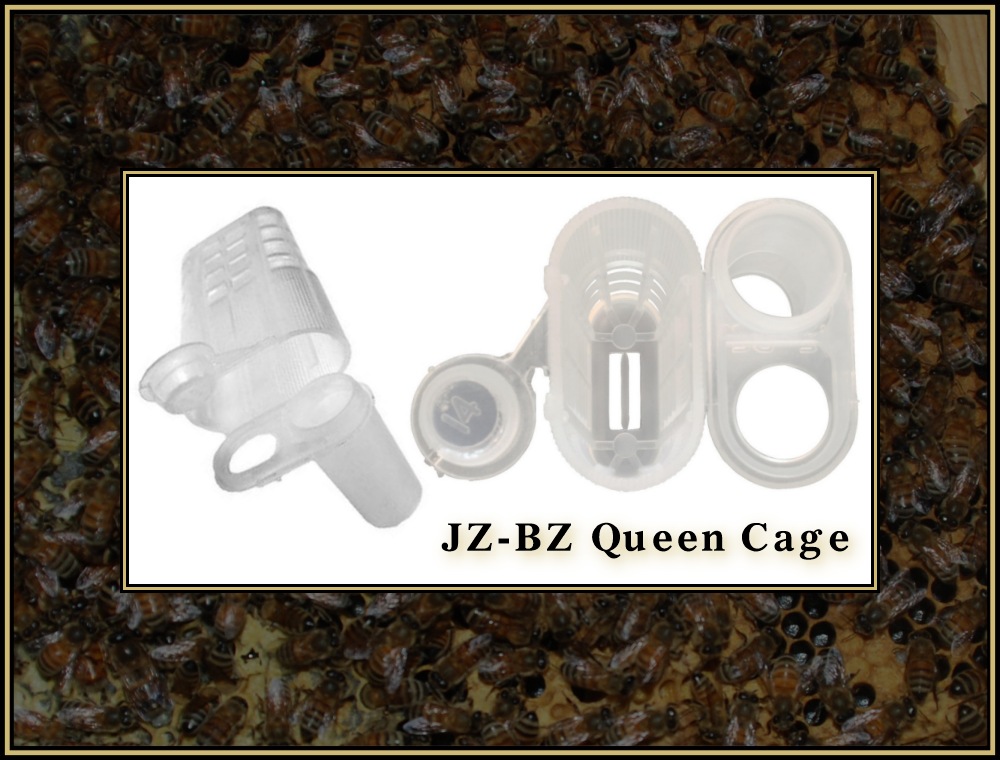
JZ-BZ Plastic Cages
These are a very popular choice for queen breeders/suppliers because of their ease of use and handling - both for the breeders and the beekeepers.
They can easily be pressed into the wax in the brood nest area in between frames without concern of the vents being blocked. Therefore the bees have access to at least two sides of the cage to care for the queen thought the cage.
This is the style cage shown in the video at the top of this page. The cage is placed on the top bars to see how the colony responds to the queens presence. The bees in the video are obviously not acting aggressively towards her, which is a sign they are willing to accept and adopt her as their new mother.
Once released, the queen will spread her pheromones over any open brood, thus adopting them as her own. One big happy family again.
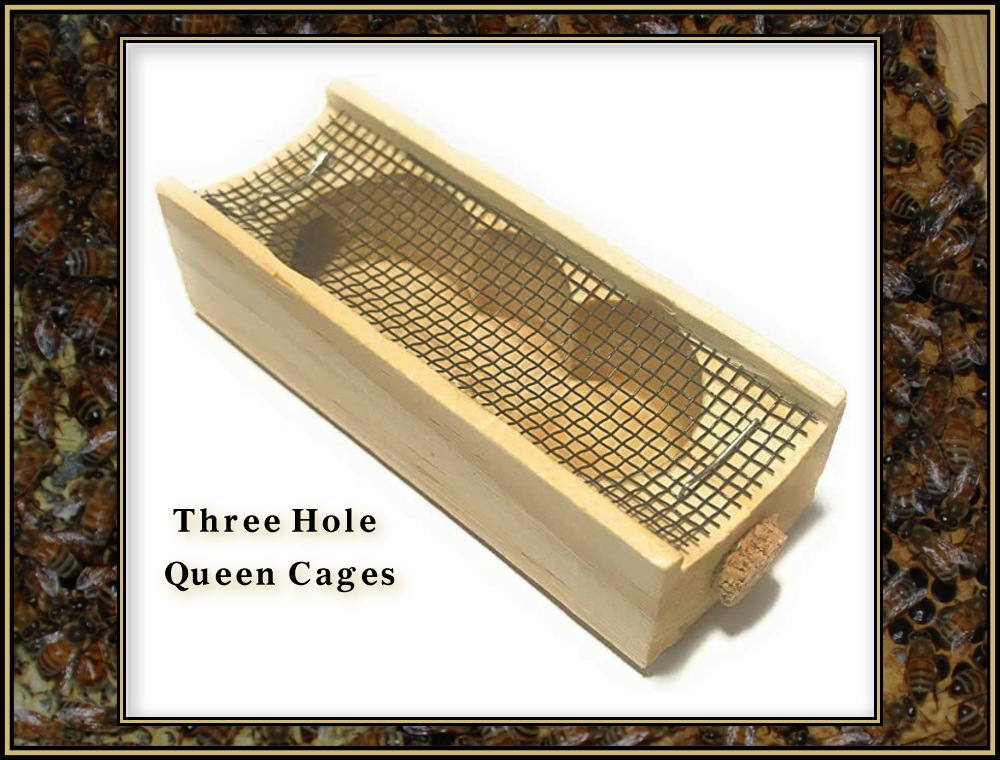
Three Hole Wooden Cages
These are commonly used and work fine as long as they are installed correctly.
