

Bee Behavior

What Provokes Defensive Behavior
While fear of the unknown is normal, it can still be stressful and even dangerous. Gaining an understanding through education and experience reduces the unknowns and can help transform fear into respect and minimize the dangers involved with handling honey bees.
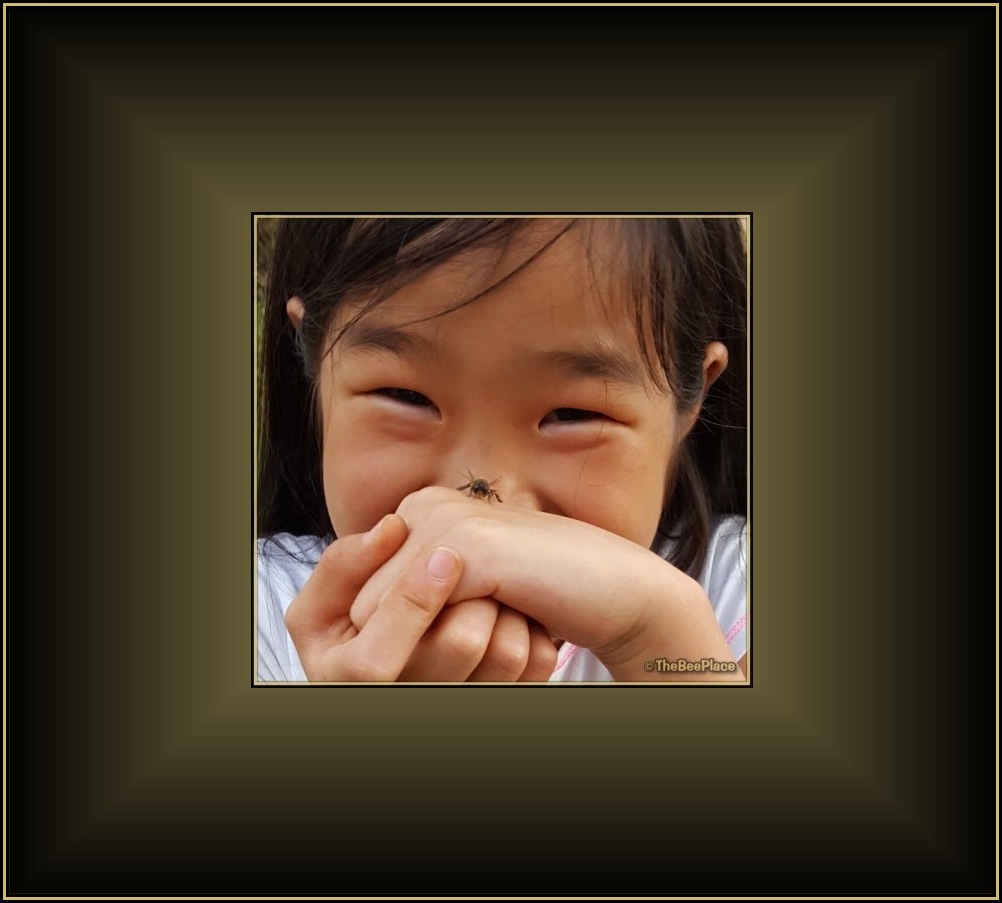
We'll take a deeper look into what elicits a bee's defensive behavior and sting response in order to help you understand what to avoid in order to minimize the chances of getting stung by a random bee, or even when checking your own hives.
- Have you ever been stung by a honey bee? Or perhaps it was a wasp? How can you tell the difference?
- Did you know that a honey bee will die if they use their stinger on a person or another mammal?
- Did you know that the boy bees (called Drones see photo) do not have a stinger?

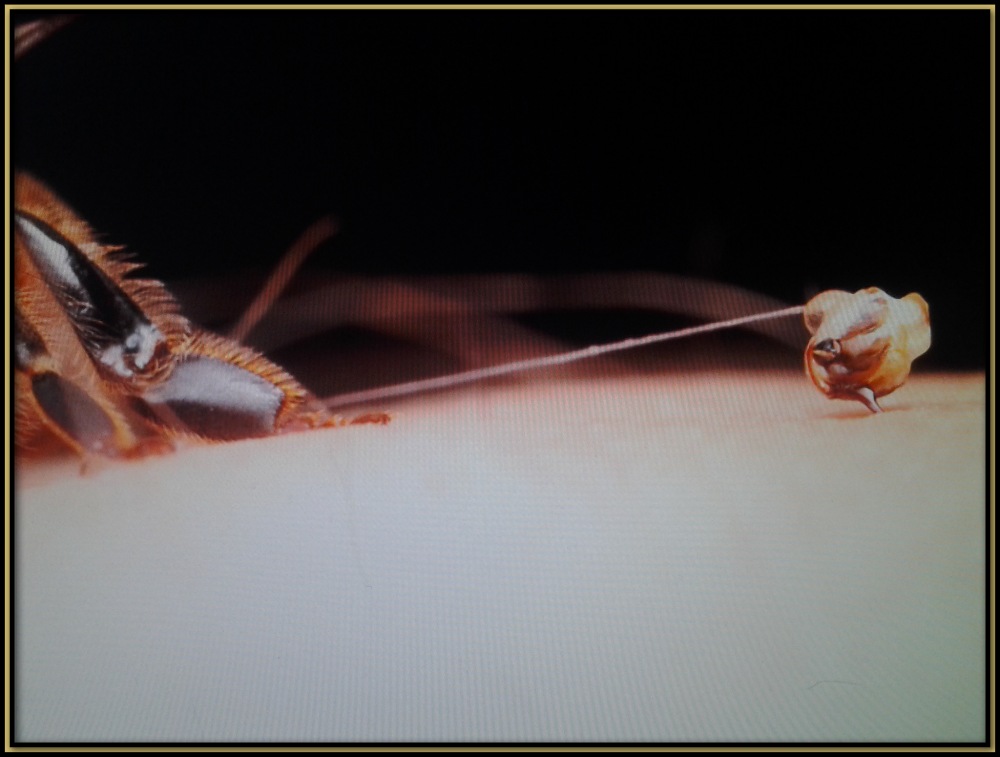
These tiny creatures have a reputation for causing pain
And rightfully so, they are very protective of their family and homes. Can we blame them for that, no but we can relate and avoid doing anything that makes them feel like we are a threat or danger to their colony.
As a beekeeper, it is important to check on the status of your hives frequently to monitor their health and food stores. Therefore beekeepers need to learn how to co-exist with their hives without causing the defense response. When we behave like a bear, the bees are prone to treat us like a bear.
Learning to move slow, steady and methodically vs herky-jerky fast moments and reacting to a bee flying by your ear or near your face will take some time, but can be easily achieved with a little practice.
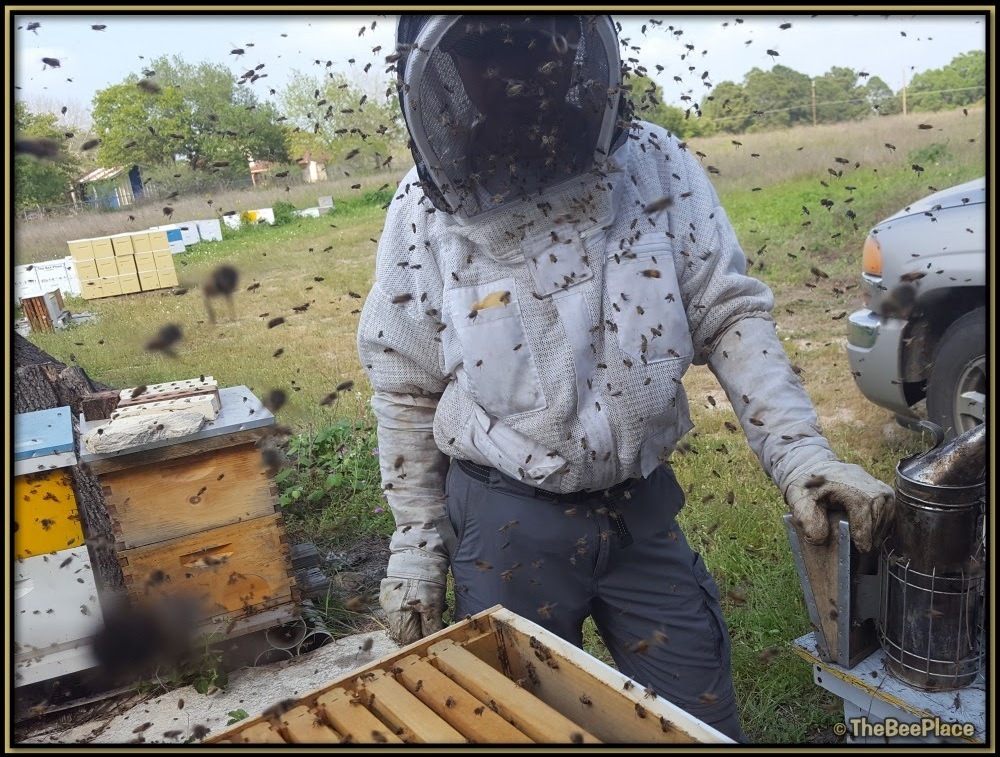
Common triggers that provoke a bee:
A foraging bee away from its hive is unlikely to sting unless it feels trapped or is swatted at. However, the defensive instinct is strong near the nest.
- - Sudden movements and swatting:
- - Jerky or fast movements are the most common cause of a sting. To a bee, a sudden motion appears as an attack from a predator.
- - Vibrations and loud noises:
- - Bees are sensitive to vibrations and the noises from small gas engines, like lawnmowers, trimmers, chainsaws and such. These can make a hive feel under attack and trigger a defensive response.
- - Crushing a bee:
- - This releases a smell called the Alarm Pheromone that smells like bananas and signals an alarm to other bees, attracting them to defend against the perceived threat.

Strong scents: Bees have a keen sense of smell
Strong perfumes, colognes, and even scented soaps and hairsprays can be perceived as an irritant or confuse a bee or even smell like something to eat, so they may investigate the source.
Dark colors and hair: Many of the bees' natural predators, such as bears, are dark and furry. Bees will instinctively target dark, hairy, and leathery areas, such as the head.
Proximity to a hive: The closer you get to a colony, the higher the risk of disturbing it. Beekeepers use smoke to mask alarm pheromones and prevent the bees from becoming alarmed during hive inspections.
Threats to the colony: A hive may become more defensive if it is under stress from predators, pests, or a lack of resources.
The bottom line is, we live in Africanized Bee territory, so we need to be informed and help educate others to avoid getting bees aggravated, especially when we are not suited up and prepared for the occasion.
Keep calm and save the bees
If a bee is near you, your best strategy is to remain calm and still.
The bee will die if she stings you, so it is not in her best interest to sting when she is not defending her home and colony. Her sting has barbs so when it penetrates a fleshly surface, it sticks and stays in the flesh.
Therefore, as the bee flies away, her internal parts are pulled out, which leads to a slow death.
So by keeping your cool, you can avoid a painful sting and the bee losing her life. Calmer heads prevail.
So, keep calm and save the bees.
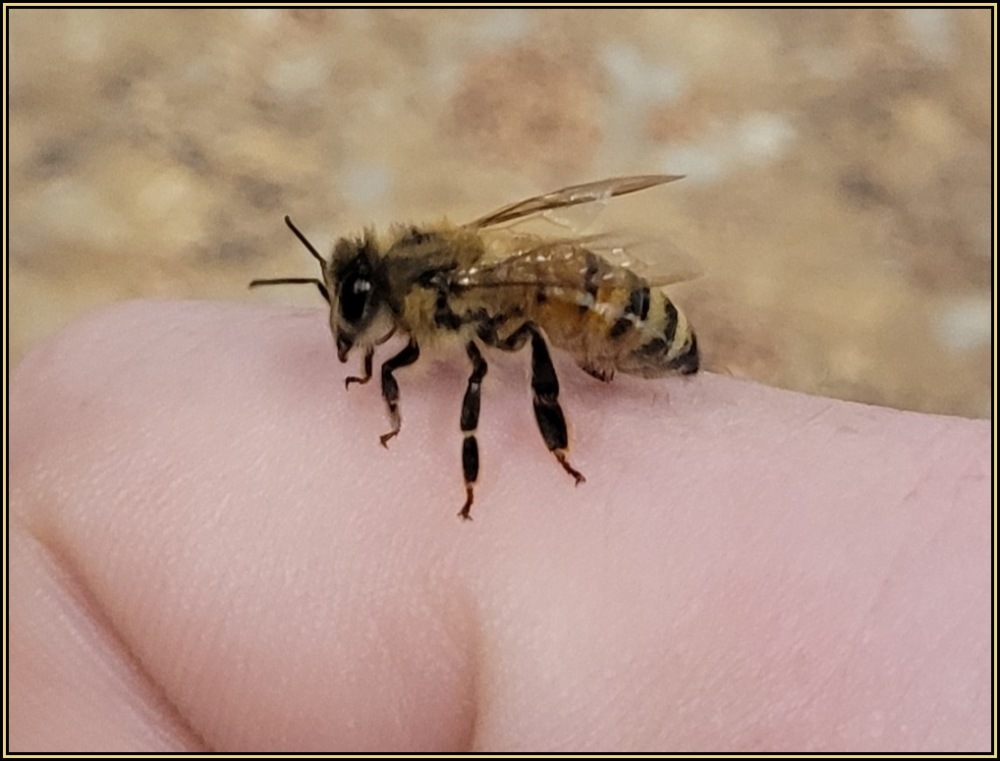
How to coexist peacefully with bees
Move away slowly: If a bee keeps buzzing near you, walk away slowly and calmly instead of swatting at it.
Wear light-colored clothing: Choose light-colored, smooth fabrics, as these are less likely to resemble a bee's natural predators.
Avoid scents: When outdoors in an area with bees, avoid wearing strong fragrances. Especially scents like Lemon Grass, a known bee attractant.
Stay out of the "flight path": If you see bees flying in and out of a particular area, stay at least 5 to 6 feet away from that path. (like the runway at the airport)
Be aware of your surroundings: When spending time outdoors, especially barefoot, be mindful of where you sit or step to avoid accidentally crushing a foraging bee.
