

Checking For Mites

Checking for Mites
Learning the status to determine the treatment method needed
Questions about Mites
While yes, mites do hitch a ride on bees, so they can occasionally be spotted on the backs of bees, but rarely unless the infestation rate is really high.
However they quickly move to the underside of the bees and work their way into the slits of the abdomen called "spiracles". So unless you happen to accidentally spot one on a bee's back, or catch a bee and check the underside in the spiracles of the bee, where their tracheal (breathing tubes) are located, you are not likely to see many mites... even when there are a good deal of mites present in the nest.

Checking the Bees for Mites
This is a process that has evolved and improved over the last several years. In the late 1900s, Drone brood uncapping was popular because it was observed the mites prefer having the extra three days to lay eggs in the drone cells. As much as about a 10 to 1 preference over worked brood cells during the growing season, so it is an effective gauge during the spring, but not later in the year when there is little to now drones being reared.
The "sticky board" method can be used as a way to get a general idea, but it is not very dependable because it requires getting a variety of data from the hive before an accurate assessment can be made. i.e. number of frames of bees, number of frames of brood, etc. and of course this will differ from hive to hive.
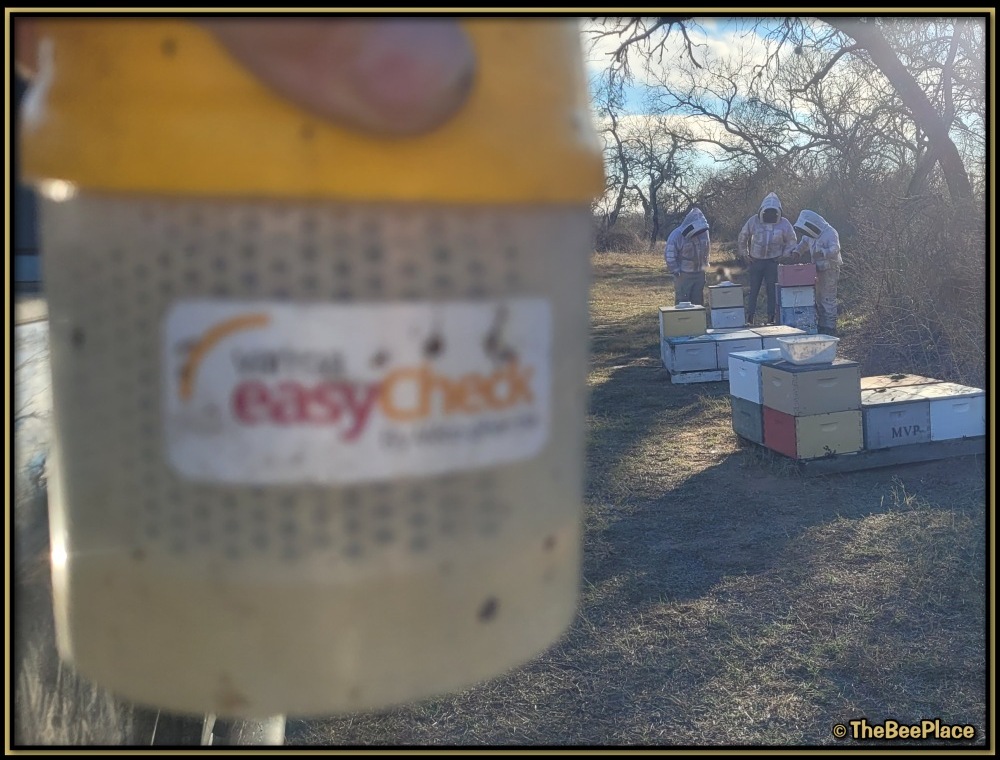
This short video clip shows a half a cup of bees covered in powdered sugar in a mason jar using the "Sugar Roll" aka Sugar Shake method. Originally it was a popular way of checking the colony for mites because it did not "kill any bees", but that was proven to not be totally the case. Then when the results were put to the test in field trials, it did show mites in the rolls, but it was found not to be as consistently accurate as believed.
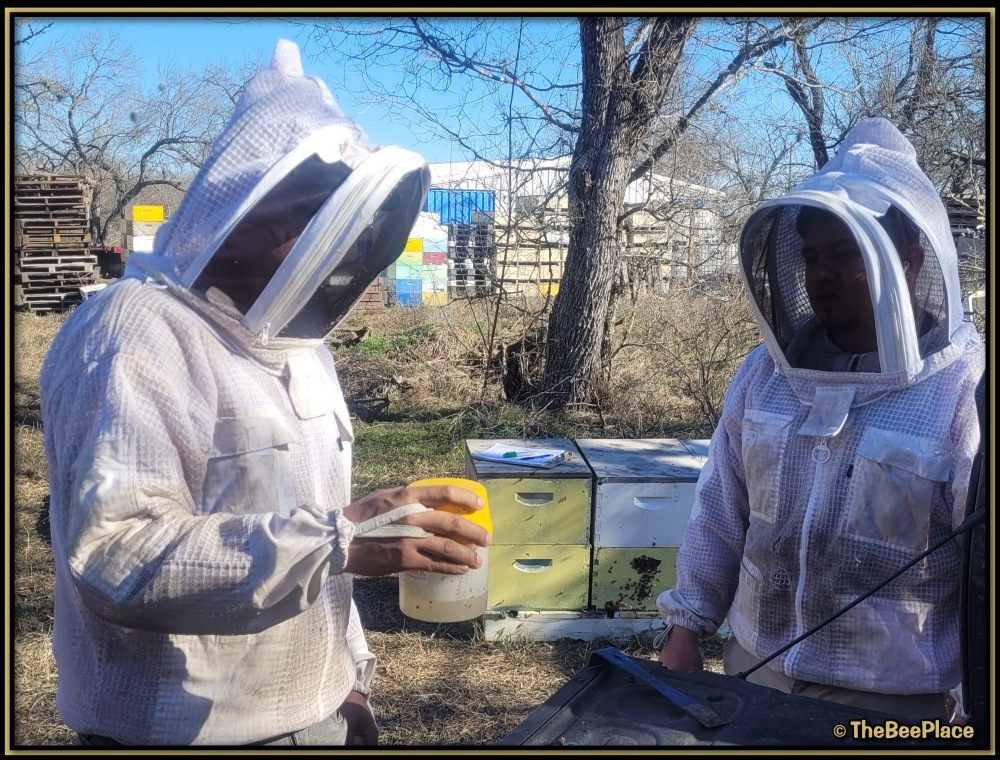
So the same basic concept soon evolved and was updated to the "alcohol wash" method (see Randy's video link below), which has more recently been updated to use a dawn dish soap and water solution. Similar to the Ether roll, the alcohol and soapy water methods do sacrifice around 300 bees, the results are more constant and considered the most accurate to date.
CO2 Injection is another option that works well and is very similar to the wash methods, without killing bees, but is not as popular because the CO2 cartridges are not as readily available as soapy water. Not to mention that sacrificing 300 bees when the queen is laying as much as 2,000 eggs a day is really not a significant loss.
There are certain requirements for selecting the correct bees to use in any of the roll/wash methods. Meaning, simply collecting 300 random bees is not how it works. Since the mites do not hang out very long on forager bees nor are they in the stored/capped honey areas of the nest, the bees on those frames will have fewer mites and not provide a true estimate.
A frame of brood is selected from within the nest area where there are plenty of open cells with developing larvae and brood food. This is where the mites gravitate to because the bulk of the nurse bees will be in this area tending and feeding the young.
The "economic threshold" is considered the safe level of having from 2 to 4 mites per 100 bees. This is based on the research that show that when a colony has a mite build up of more than 4 mites per 100 bees in the colony, the colony will start to decline in health and at 2 per 100 there is a noticeable drop in honey production.
The mite population is directly related to the virus load and health problems are more from the viruses that the mites vector than they are from the small amount of fat body they get when they bite and feed on bees. So the mite load is what the calculations are based on to determine the overall health risks involved with the ratio of mites per bee in the colony.
Also see:
Randy Oliver mite wash video 2018
How to do an easy Alcohol Wash
Once we know the numbers, we can then develop the best plan of action for Treating for Mites.
When to treat?
Next: Treating for Mites
We offer multiple types of treatments and encourage others to explore all the options.
