

Additional Resources

Trusted Sources
You are not alone!
When it comes to researching information about honey bees, we are all exposed to the same internet information overload. We have had several years to consume and digest a small portion and are still learning daily. Having a narrowed down short list of quality sources is only a start, but it is a place to start with confidence.
Tried and True
The links below are to websites and videos we trust and feel comfortable about recommending to others. As with most anything else on the internet now days, there are some good and some not so good websites, blogs, and social media content. Since there are no internet police and no filters and to limit false information and myths that get spread like wild fire, we recommend sticking with the websites maintained by proven successful beekeepers and research biologists, like the following:
- Texas A & M's Dr. Juliana Rangel
- FSU - Florida's Dr. Jamie Ellis
- Cornell University's Dr. Tom Seeley
- USDA-ARS Bee Research Laboratory Dr. Zac Lamas research at in the Evan’s Lab in Beltsville, MD
Other's like Louisiana State University (LSU) and University of Minnesota (UMN) have great bee labs and are top rated as well.
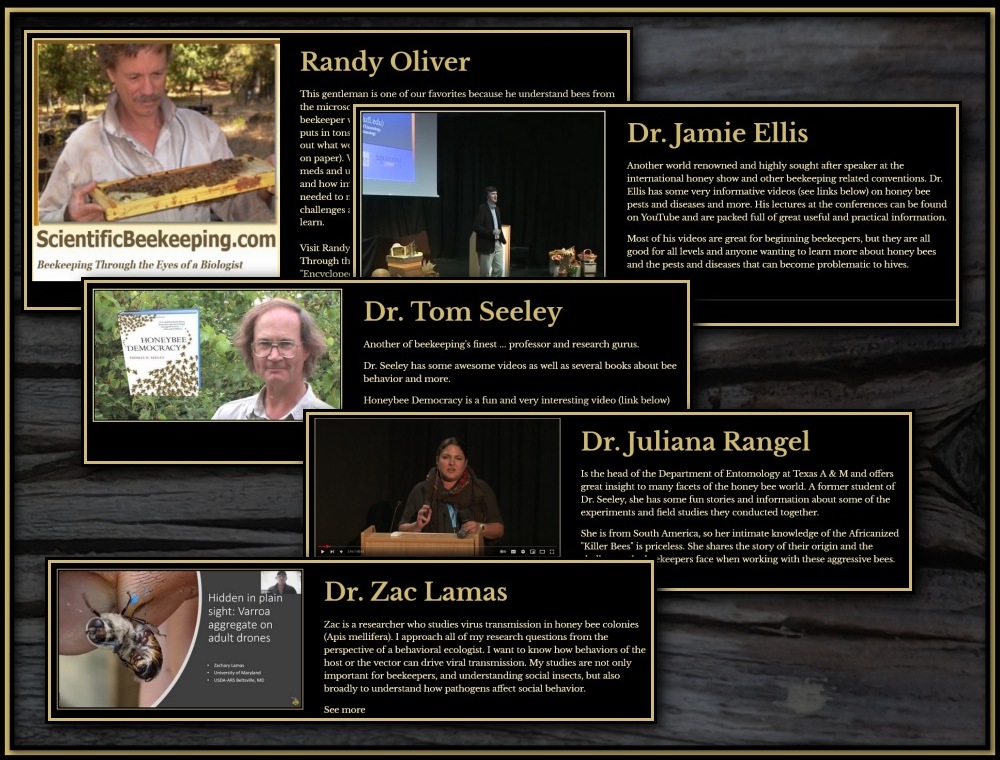
Then of course, there's Randy Oliver, a commercial beekeeper and research biologist that does research and field trials and submits his reports to the USDA to help get meds approved -which can take years. Randy also writes monthly for the American Bee Journal since 2006, one of the big beekeeping magazines.
These are some of the top bee labs and research scientists in the field. Of course there are others, but these are some of the names and sources we trust.
--Disclaimer - We have obviously not tested every method these experts use and discuss, we are all still learning, just as they are.

Randy Oliver
This gentleman is one of our favorites because he understand bees from the microscopic level out. Randy is a research biologist and commercial beekeeper with a wealth of information from basic to advanced level. He puts in tons of hours doing very extensive field trials and research to find out what works and what does not work in the field (not just in the lab or on paper). We've assisted and contributed to a few of these trials for mite meds and understand just how time consuming these things can become and how important they are to conduct in the field to gather the data needed to make decisions for our own hives. Every area has different challenges and outcomes, so we help when we can and share what we learn.
Visit Randy Oliver's Website www.ScientificBeekeeping.com - Beekeeping Through the Eyes of a Biologist - to discover what we consider to be one of the top Beekeeping Research sites.
Randy is also a renowned international speaker and writes regularly for the American Bee Journal Magazine.
His website has topics that include:
- Articles By Publication Date
- Bee Behavior and Biology
- Varroa Management
- Bee Nutrition
- Colony Health – Diseases, Viruses, CCD
- Pesticide Issues
- Nosema ceranae
- Almond Pollination
- Miscellaneous articles
- Research Updates
- Beginner’s Pages
A YouTube Search for Randy Oliver offers a good deal of lectures and tutorials on various topics, including some of our favorites on the topics of:
- Tips for Working Your Bees
- Varroa Management, Concepts and Practice
- Honey Bee Biology to name a few
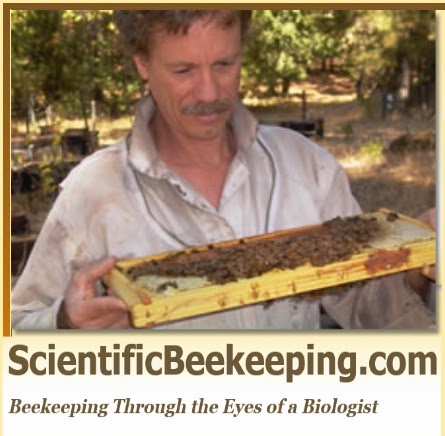
Dr. Jamie Ellis
Another world renowned and highly sought after speaker at the international honey show and other beekeeping related conventions. Dr. Ellis has some very informative videos (see links below) on honey bee pests and diseases and more. His lectures at the conferences can be found on YouTube and are packed full of great useful and practical information.
Most of his videos are great for beginning beekeepers, but they are all good for all levels and anyone wanting to learn more about honey bees and the pests and diseases that can become problematic to hives.
Videos by Dr. Jamie Ellis, PhD
Pest & Disease Videos
- 1) Tracheal Mite (19min 11sec)
- 2) Nosema Disease (15min 15sec)
- 3) Small Hive Beetle (18min 12sec)
- 4) Varroa Mite (25min 22sec)
- 5) American & European Foulbrood Part 1 (15min 32sec)
- 6) American & European Foulbrood Part 2 (7min 8sec)
- Videos provided by:
- Jamie Ellis, PhD, Gahan Endowed Associate Professor
- jdellis@ufl.edu
- Honey Bee Research and Extension Laboratory
- Department of Entomology and Nematology
- University of Florida Bee Lab Website www.UFhoneybee.com
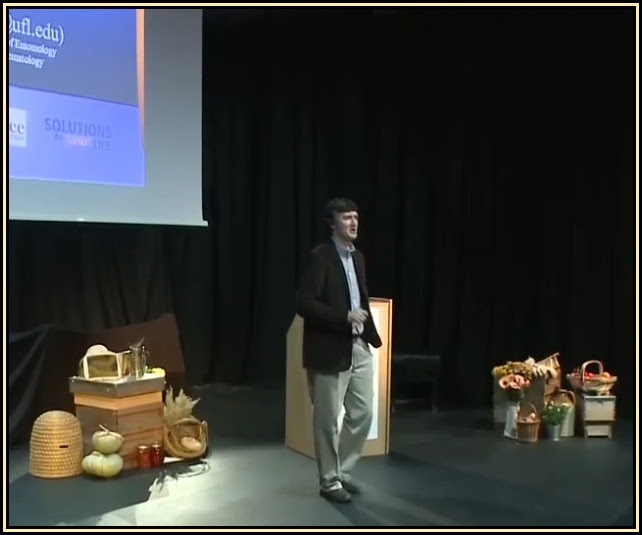
Dr. Tom Seeley
Another of beekeeping's finest ... professor and research gurus.
Dr. Seeley has some awesome videos as well as several books about bee behavior and more.
Honeybee Democracy is a fun and very interesting video (link below) explaining his findings about how bees go about communicating and decision making as a whole - colony mentality.
See more
Thomas Dyer Seeley is the Horace White Professor in Biology in the Department of Neurobiology and Behavior at Cornell University.
A few of our favorites on YouTube:
- Tom Seeley: Honeybee Democracy
- 57:06 YouTube · Cornell University · Feb 15, 2012
- Tom Seeley - The Craft and Science of Bee Hunting
- 1:26:25 YouTube · Iowa Honey Producers Association · Dec 2, 2023
- Dr. Thomas Seeley On Bee Behavior, Swarm Piping, Bee ...
- 38:52 YouTube · Mann Lake Bee Supply · Aug 12, 2025
- Seeley, Lives of Bees
- 1:09:55 YouTube · Albert R. Mann Library · Jun 23, 2020
A YouTube search for Dr. Tom Seeley offers several more video and podcasts to enjoy.
Books on Amazon: Thomas D. Seeley: books, biography, latest update
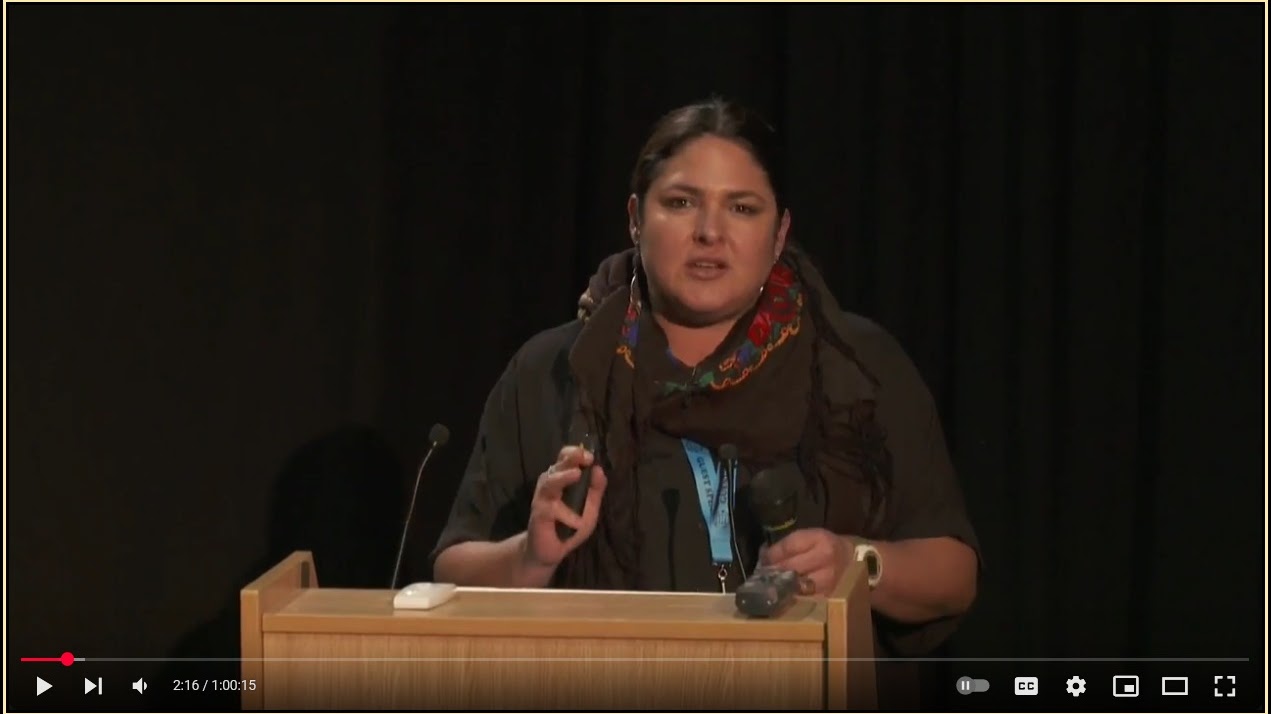
Dr. Juliana Rangel
Is the head of the Department of Entomology at Texas A & M and offers great insight to many facets of the honey bee world. A former student of Dr. Seeley, she has some fun stories and information about some of the experiments and field studies they conducted together.
She is from South America, so her intimate knowledge of the Africanized "Killer Bees" is priceless. She shares the story of their origin and the challenges the beekeepers face when working with these aggressive bees.
Dr. Juliana Rangel - Head of the Dept. of Entomology at Texas A & M
Africanized Honey Bees
1:00:16 YouTube · National Honey Show · Dec 22, 2015
Biology of the Colony
1:06:38 YouTube · National Honey Show · Jan 15, 2016
Queen Management Essentials
1:19:19 YouTube · NY Bee Wellness · Dec 17, 2022
A YouTube search for Dr. Juliana Rangel offers several more video and podcasts to enjoy.
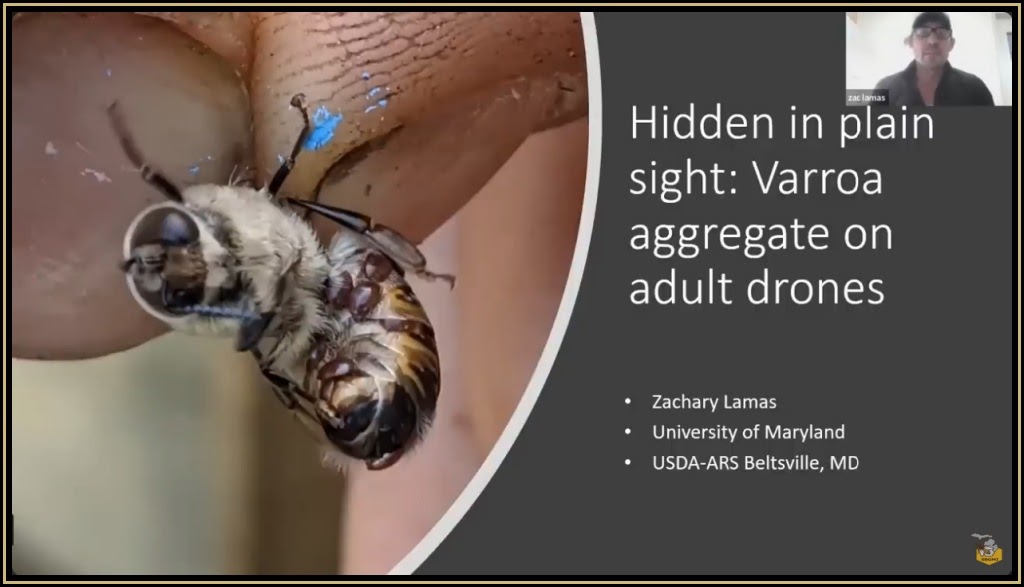
Dr. Zac Lamas
Zac is a researcher who studies virus transmission in honey bee colonies (Apis mellifera).
Dr. Zac... "I approach all of my research questions from the perspective of a behavioral ecologist. I want to know how behaviors of the host or the vector can drive viral transmission. My studies are not only important for beekeepers, and understanding social insects, but also broadly to understand how pathogens affect social behavior."
"My work continues as a post-doctoral research at in the Evan’s Lab in Beltsville, MD at the USDA-ARS Bee Research Laboratory. Using functional genomics my work will attempt to link behaviors with the gene’s and pathogens that regulate them."
"Why don't we sample drones?" with Dr. Zac Lamas
1:41:44
In this compelling presentation Zac Lamas shares findings regarding the aggregation of Varroa mites on Drones and discusses sampling methods ...
YouTube · SBGMI - Sustainable Beekeepers Guild of Michigan · Mar 28, 2023
Visit the Zac Lamas website for more ...
A YouTube search for Dr. Zac Lamas offers several more video and podcasts to enjoy.
Educational Materials
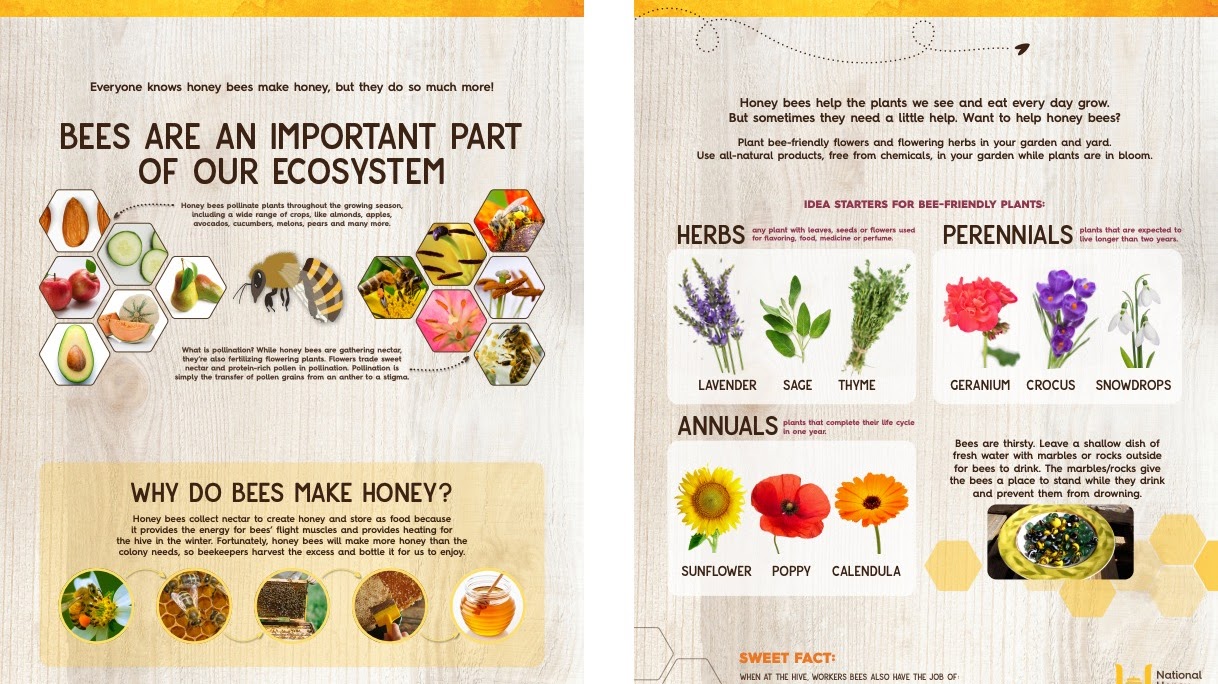
From the National Honey Board
Made for kids grade 2-4, these handy activity sheets are designed to teach your kids about bees, honey, and just how important they are to the world. Covering everything from beehives, pollination, how honey is made, and even bee sustainability, each sheet features fun activity kids can do at home or in school.
Teachers can even download printable posters to use in their classrooms!
Educational Materials From the National Honey Board
Additional Related and Informative Pages and Websites:
- Different Types of Bees - what is currently available
- About Africanized Bees - what you should know
- About Apitherapy - Basic information with additional resources and links
- About Ag Exemption - Texas law now allows the use of honey bees as a way of saving tax dollars
The Texas A & M AgriLife Research - Apiary Inspection website and the Honeybee Lab website at A & M both provide a wealth of additional resources.
As mentioned above, we are part of the Texas Master Beekeeper Program and encourage anyone with a desire to learn more about bees and share their knowledge with the general public to join this program. The TMBP website has all the information and study guides you need to become a Master Beekeeper!
The folks over at Honey Bee Health Coalition have put together a very extensive guide on Varroa Mite Management which includes videos and downloadable guides in both English and Spanish.
List of prominent U.S. university bee labs worth researching.
- Cornell University (Dyce Laboratory for Honey Bee Research): With a long-standing history of honey bee research, Cornell has a major presence in apiculture and pollinator health. Its Pollinator Network conducts multidisciplinary research and offers a Master Beekeeper Program.
- Penn State University (Center for Pollinator Research): This center is known for its leadership in investigating threats to honey bees, such as viruses, pests like mites, and the effects of pesticides. The lab also developed the Beescape tool, which helps beekeepers and land managers assess environmental data.
- University of Florida (Honey Bee Research and Extension Laboratory): The UF/IFAS Honey Bee Lab focuses on honey bee husbandry, biology, and ecology. The lab is also home to the podcast "Two Bees in a Podcast".
- Texas A&M University (Apiculture Program): This university hosts one of the largest honey bee research labs in the country. Their work is currently focused on eradicating the varroa mite to save the honey bee population.
- University of Minnesota (Bee Lab): Known for its research and robust extension program, this lab and its founder, Marla Spivak, have been highly influential in apiculture. The lab has a YouTube channel with extensive educational resources.
- University of California, Davis: This university is a well-known hub for bee research, with a focus on bee science and conservation.
- Washington State University (WSU Bee Program): WSU is actively researching the most urgent issues affecting bees, including health, nutrition, parasites, and reproduction. They also maintain a queen bee breeding program.
International university bee labs
- University of Guelph (Honey Bee Research Centre), Canada: This prominent center sells honey and other related products to support its environmental initiatives. It also offers educational resources, including a YouTube channel.
- Swedish University of Agricultural Sciences (SLU), Sweden: This university houses the Centre for Honey Bee Research and Education, which maintains numerous honey bee colonies and has a state-of-the-art molecular lab. It has a top ranking globally for agriculture and forestry.
- Southern Cross University (Bee Research and Extension Lab), Australia: This institution is recognized for its dedicated bee research and extension programs
